
What a Magna Resident Lookup Can Check
No single Magna resident lookup confirms every part of a person’s life. The useful stack begins with a name, address, or time period and chooses the custodian that actually holds that record. Property and deed sources speak to land and recorded parties. Voter tools speak to registration fields. Courts expose public case metadata subject to exclusions. Vital records use eligibility rules, and Commerce or DOPL records describe business or professional relationships.
| Record | What It Confirms | Where to Search | Access |
|---|---|---|---|
| Property roll | Published owner and property location | Salt Lake County Assessor | Free entry portal |
| Voter registration | Defined registration fields and vote history | Utah Voter Search | Public fields, privacy rules |
| Court records | Public case metadata and name variants | Utah XChange | Search and copy limits |
| Vital records | Historical death index or eligible certificate | Utah Vital Records | Thresholds and relationship rules |
| Licenses and entities | Credential, business, principal, or agent connection | DOPL / Commerce | Free lookup, some data fees |
Use an address first when the property is known. Use the name and approximate era first for genealogy. Use a public office role, business name, or license number when the person is connected to an organization. Each route should produce a source/date label before another record is used to confirm it.
Using Utah XChange for Magna Cases
Utah XChange is a public case-search route, not a resident database. Search results can provide public proceeding metadata and name variants, while document images and certain case types have their own access limits. Utah court guidance says most district-court CORIS data is available by the end of 1998, electronic district documents generally date from July 1, 2010, and justice-court conversion varies by court. Older records may have shorter converted summaries.
Magna is served through the Salt Lake County Justice Court path. Use the court’s own contact, calendar, and recording information when an online result is incomplete. A case party may have an address connection in a filing, but that does not establish current residence. Keep case number, court, filing date, and status with the name match.
Open the Utah XChange search for the official guest entry and current access prompts.
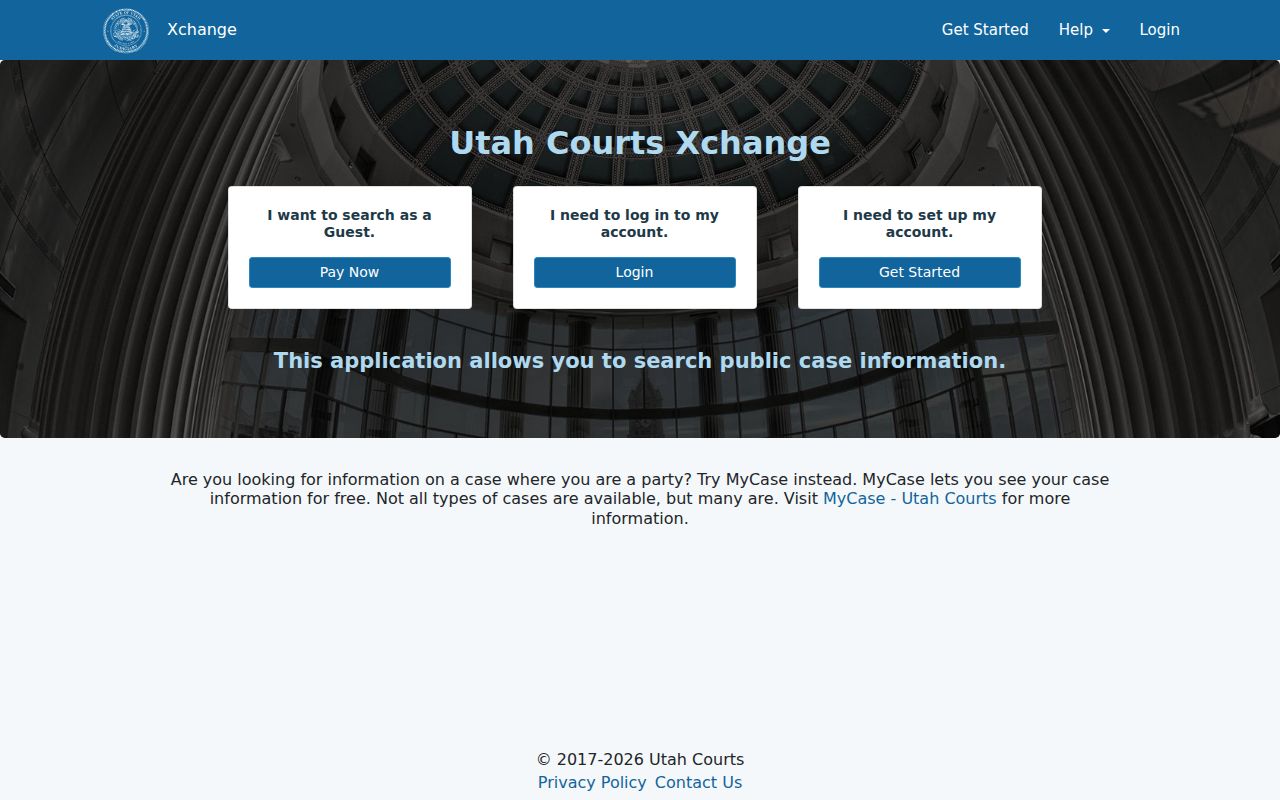
The captured view is a portal entry, not a sample Magna person record, so no identity should be inferred from it.
Vital Records Need a Qualifying Path
Utah Vital Records and Statistics handles birth, death, marriage, and divorce records, but a resident lookup cannot treat a certificate as an open name list. Under Utah Code §26B-8-125, death certificates reach a general public threshold after 50 years, birth records after 100 years, and other vital events after 75 years. Earlier certified access requires a qualifying relationship or another statutory basis.
The marriage and divorce request route asks for identifying details, relationship information, identification, payment, and delivery choices as applicable. The secure ordering portal and official forms are the right place to check current instructions. Historical indexes can support a family-history search, but an index is not the same as a certified copy and may not include every event.
The Utah Vital Records access page sets the current record path used by a Magna resident lookup.
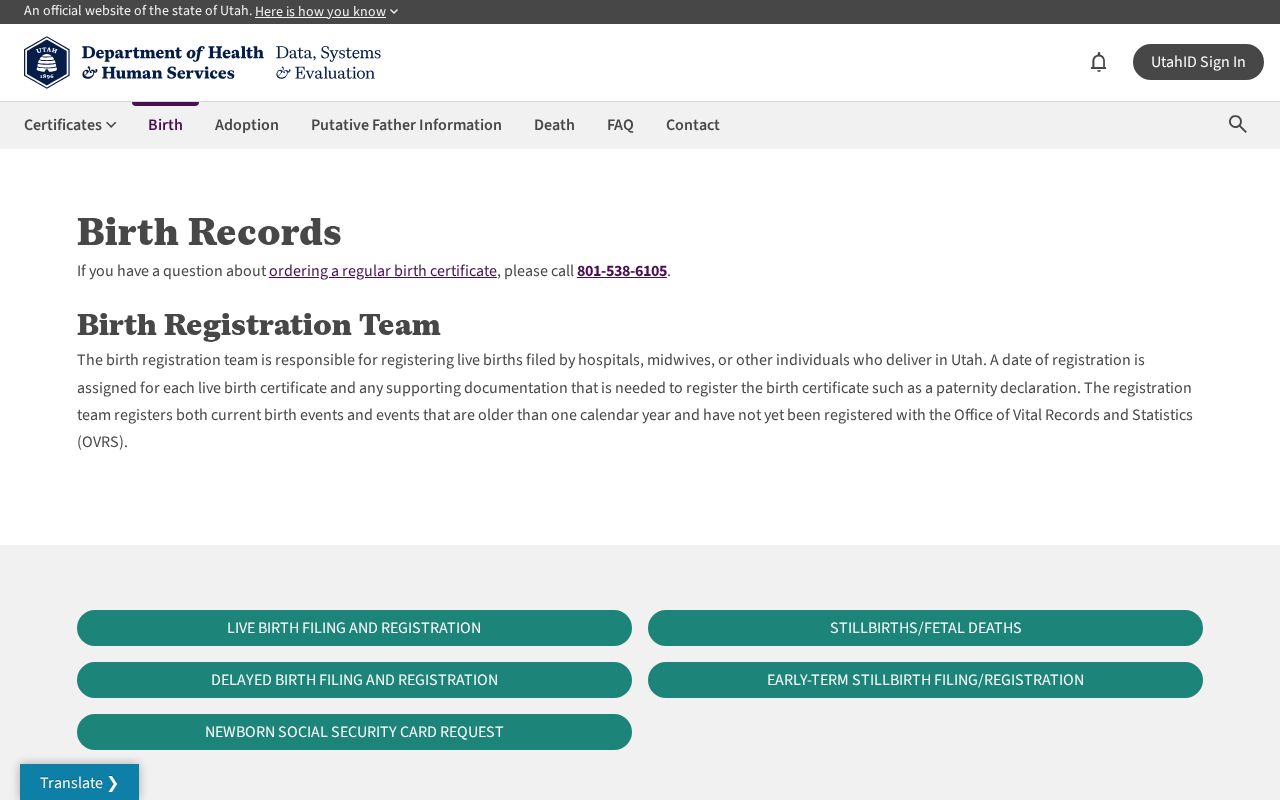
Use a certificate request only when the relationship and record purpose fit the published access rules.
Utah Voter Search Is a Self-Check
The Utah Voter Search person form asks for first name, last name, date of birth, street address, city, and ZIP, then Submit. The address form asks for street address, city, and ZIP. Both require JavaScript. The research captured the form, not a Magna search result. Treat the tool as a voter’s validation route, not as a guaranteed list of every person at an address.
Public default fields can include name, physical and mailing addresses, age range, party affiliation, and vote history. DOB, driver-license or state-ID number, Social Security number, email, and phone are not publicly shared. At-Risk voters may be withheld or anonymized. The Salt Lake County Elections Division can be reached at 385-468-7400 or vote@saltlakecounty.gov, at 2001 S State Street Suite S1-200 in Salt Lake City, Monday through Friday, 8:00 a.m. to 5:00 p.m.
The Utah Voter Search person page shows the fields before a user enters their own information.
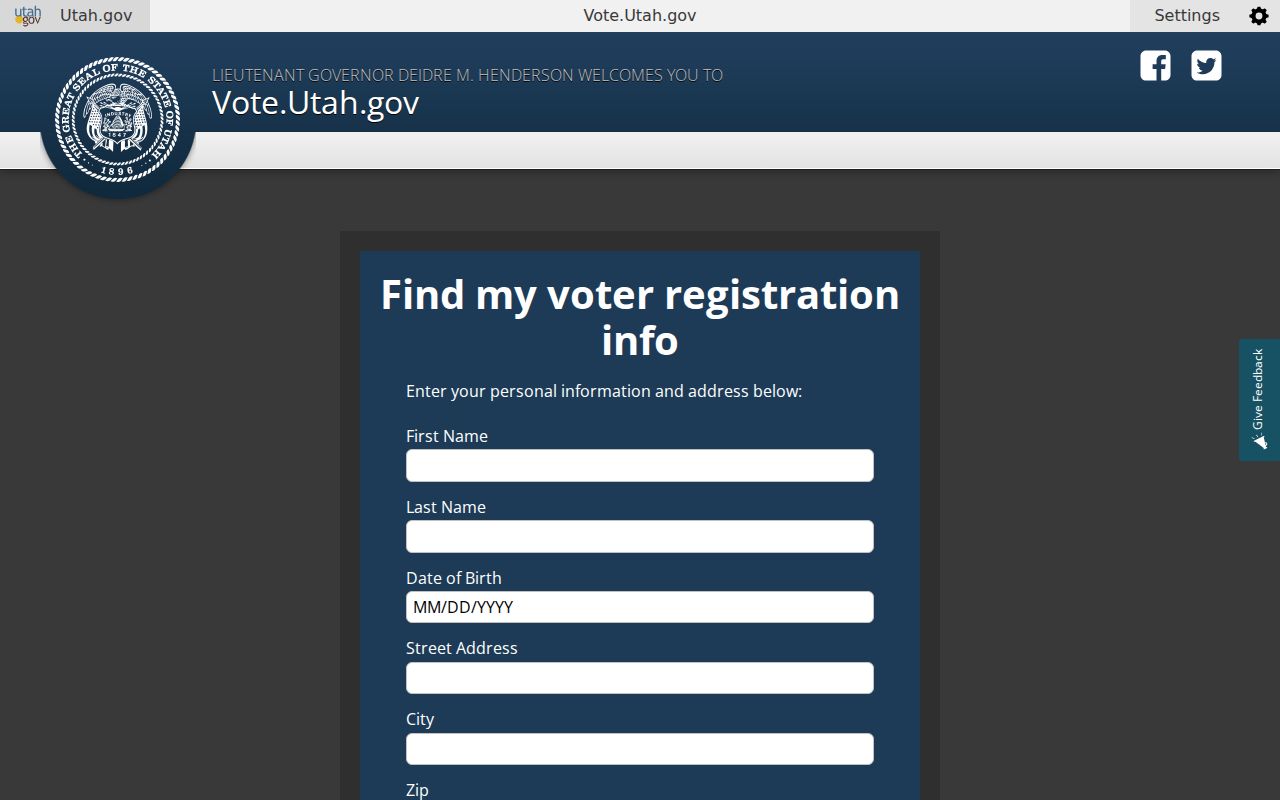
A returned registration field still needs its source date and privacy context.
Label Every Magna Result
Before accepting a match, write down what the record actually says. This small habit prevents a property owner, court party, historical householder, business principal, and voter from becoming one unsupported profile.
- Record type, custodian, and the official URL used
- Name spelling, aliases, and the date or year attached to the result
- Address meaning, such as property, mailing, business, registration, or historical address
- Reference number, parcel, case number, document date, or license number
- Access level, omissions, and whether an image or certified copy was reviewed
For a historical name, the Utah State Archives death index, FamilySearch collections, Polk directories, newspapers, cemetery records, and probate catalogs can supply different dates. For a current property, the Assessor and Recorder belong together. For a professional link, DOPL results include licensee name, city, profession, license number, and status in the described public structure.
Verifying One Magna Resident
Verification means finding two or more records that agree on the right details without pretending they prove more than they do. Start with an address, full name, or approximate time. Use the Assessor for parcel context, the Recorder for recorded parties, the voter tool for a voter’s own check, and the court or vital route only within its access rules.
- Anchor the name to a dated address, parcel, public role, business, or historical directory entry.
- Run Utah XChange with spelling variants and record the court, case, date, and public status.
- Compare a historical death index, eligible vital record, newspaper, cemetery, or probate reference when the family timeline needs support.
- Order a certified copy only from the responsible custodian and only when the published relationship or access rule is met.
- Docket
- The court’s running record of a case, including entries such as filings, hearings, and status changes.
- Index vs image
- An index points to a record; an image is the document itself and may have separate access or copy rules.
- Certified copy
- A copy issued or certified by the custodian as an official reproduction, when the requester is eligible.
BCI Does Not Offer a Public Person File
Utah’s Bureau of Criminal Identification says members of the public may obtain their own Utah criminal history, not another person’s history, unless an authorized route applies. The current page lists $20 for a subject right-of-access record and $20 for a challenge, with the fee change effective July 1, 2025. Its GRAMA form asks the requester to explain entitlement and allows actual-cost fees.
For a lawful status question, keep the systems distinct: XChange for public court metadata, the county jail gateway for current county custody, Utah DOC for state incarceration or probation/parole, VINE for notification, and the statutory offender registry for its defined records. The external jail roster needs live checking of fields and disclaimers. No result is not a conclusion.
The Utah BCI criminal-records page explains the subject-right boundary.
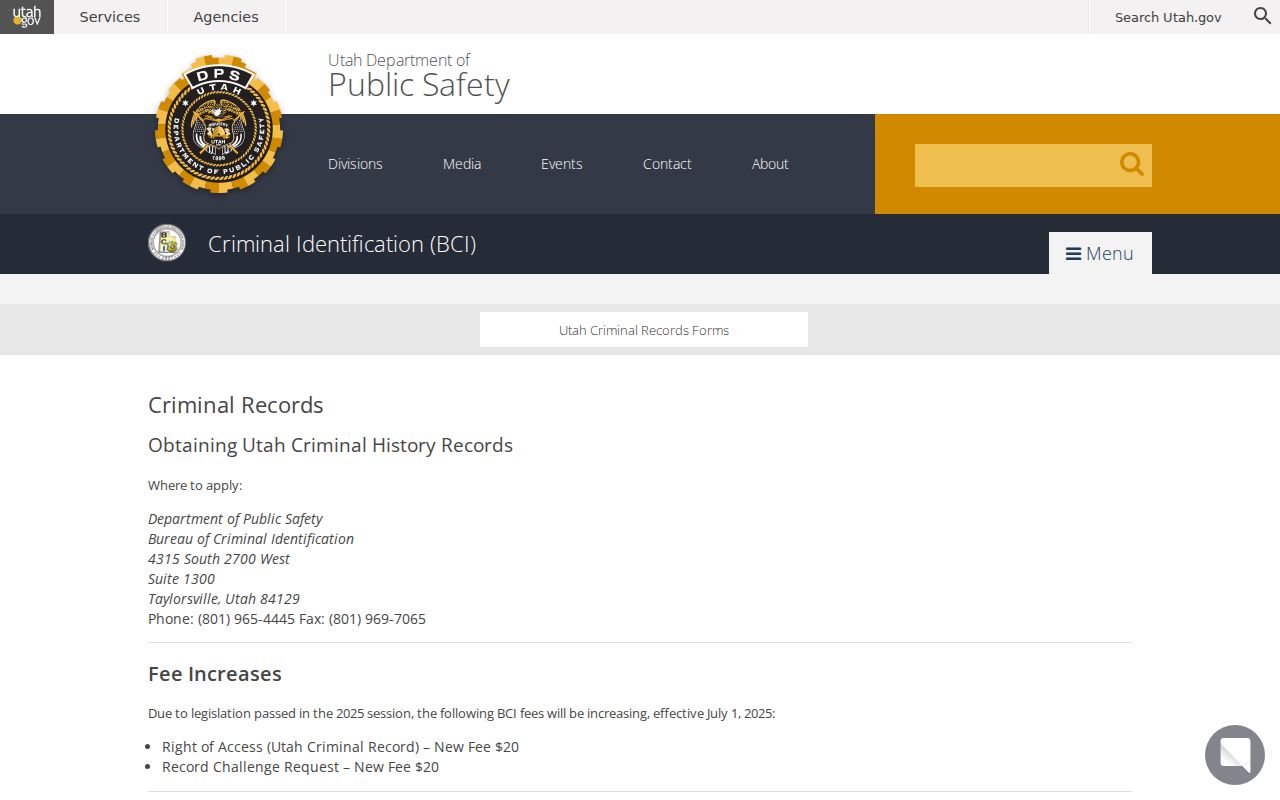
The BCI route reinforces why a name match should never be presented as a public criminal-history profile.
Limits on a Magna Resident Lookup
Utah’s Government Records Access and Management Act, or GRAMA, is an access framework, not an unlimited right to a people list. A request should name the record type, agency, location, date range, and other useful details. Salt Lake County routes public-records requests through NextRequest, generally responds within 10 business days, allows a media five-business-day route, and may charge after the first 30 minutes for staff time and actual costs.
Safe at Home and voter withholding can shield protected addresses. Court, vital, and criminal records have special exclusions. If a portal is silent, ask the custodian a narrow question, keep the answer dated, and request correction from the office that owns the record.
Lawful use. A Magna resident lookup is for personal, lawful research, family history, property questions, civic understanding, or reconnecting. Never use a record to stalk, harass, intimidate, or harm anyone.